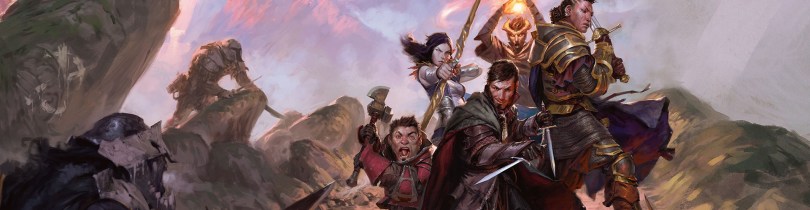
This month’s Unearthed Arcana returns to the Arcane Subclasses, with various fixes and updates.
I’m mostly going to go over the differences and updates, rather than re-examine the entire subclasses – so if you need a reminder, check our previous Analysis. No official YouTube video for this one either; it seems they stopped those for some reason.
Now, let’s get started. First off, the Arcana Domain Cleric is unchanged and doesn’t appear in this UA – same for Hexblade and Ancestral Sorcerer, so we’re going straight to the fighter.
Fighter – Arcane Archer
Lots of changes here. One of my biggest complaints with the previous version was that half your features were, in fact, not features at all and just increases to your Arcane Shot Die – and we now get proper, full features!
Arcane Archer Lore and Arcane Shot Remain the same, with the changes kicking in at level 7.
Curving Shot (Level 7)
A minor wording adjustment – It doesn’t change much, but it does change some. Instead of making a new attack when you miss, this is now part of the same attack but with a new roll, with the second target having to be within 60 feet of the original, and within your weapon’s range, instead of just within your range as a separate attack would imply. So a minor nerf, but not very significant in my opinion – 60 feet is usually enough.
Magical Ammunition (Level 7)
A new feature that gives you some extra utility, mostly out of combat. As a magic action, you can imbue a piece of ammunition with one of the following properties:
- Darkening Shot: Magical shadows fill a 15-foot Emanation originating from the ammunition for 1 minute. Nonmagical flames in the Emanation are extinguished, and creatures in the Emanation have a –5 penalty to Wisdom (Perception) checks and Passive Perception.
- Unlocking Shot: A burst of magic fills a 15-foot Emanation originating from the ammunition. A loud knock, audible up to 300 feet away, also emits from the ammunition. Any object in the Emanation that is held shut by a mundane lock or that is stuck or barred becomes unlocked, unstuck, or unbarred. If the object has multiple locks, only one of them is unlocked.
- Vine Shot: A 60-foot-long vine grows from the ammunition. You and other creatures can then climb it. The vine withers away after 10 minutes.
Some pretty niche uses – Darkening Shot is probably the one you’ll use the most. It’s also interesting to see that it gives a flat penalty to Perception, instead of disadvantage – flat penalties are very rare, so I wonder if we’re seeing a shift from the design in 5e that focused almost exclusively in advantage/disadvantage. As for Unlocking Shot, it’s an AoE Knock – not a very widely used spell but it has its moments, and Vine Shot is just a grappling hook.
You can use this feature once per short or long rest, and you can regain a use by expending a use of Second Wind – although I think once per short rest is probably enough for most cases. It might not be much, but that’s alright – you’re already getting Curving Shot at level 7, so a secondary, non-combat feature is fine.
Ever-Ready Shot (Level 10)
This was previously at level 7, now pushed to 10; but it also gets a… pretty big boost, actually. Before, it was whenever you roll Initiative and have no uses of Arcane Shot left, you regain one; now, you regain one every time regardless of how many you have left. I do like that; I won’t go as far to say that Arcane Shot is the only feature that matters in the subclass, but it’s… pretty close. Getting more use out of it makes you have more fun.
Arcane Burst (Level 15)
When you use Indomitable, each creature of your choice within 10 feet of you must make a STR saving throw against your Arcane Shot DC (which uses your INT) or be pushed 20 feet away. Actually a pretty good feature for an archer; sure, a bit weak for level 15, but again, the whole power of the subclass is concentrated on Arcane Shot. I do like it though; a pseudo-disengage when you’re in a rough spot. Pretty limited if we’re being honest, but better than nothing (as it was in the previous version).
Masterful Shots (Level 18)
And here’s out capstone feature. When a creature you can see misses an attack roll against you (any attack roll – melee, ranged, spell) you can take a Reaction to move up to half your speed away from them without provoking opportunity attacks, then make a ranged attack roll against them. Another tool to disengage – but also, to pump out even more attacks per turn, because yes; there is no limit to the number of times you can use this. Every turn, if someone misses against you, you can move and fire back.
Overall, a much, MUCH better version of the Arcane Archer; it’s still an INT subclass, which is a bit rough, but it’s certainly a lot of fun.
Monk – Tattooed Warrior
Not quite a redesign, but some pretty big changes across the board.
Beast Tattoo (Level 3)
- Chameleon and Spider are gone, which I think didn’t have to happen. They could have been reworked.
- Bat now gives permanent blindsense to 10 feet instead of when you use Patient Defense or Step on the Wind which I like. Cleaner, and just 10 feet isn’t much.
- Butterfly lets you jump with DEX instead of letting you cast Silent Image which I also like, especially thematically.
- Crane gets a change – now, when you miss a Flurry of Blows, your next attack roll against that target has advantage. It used to be that all your subsequent unarmed attacks using that Flurry of Blows had advantage – but you get 2 attacks with it until Level 10, where you get your 3rd. So after level 10 you could say it’s a nerf… but it does allow you now to use it on on-unarmed attacks as well. The issue is, you don’t really have a lot on that front – you don’t learn any offensive spells for example, and unless you’re playing some kind of throw-focused build your fists deal the same damage as your weapons anyway. But perhaps they wanted to give the other tattoos a chance; I know i’d pick Crane every time otherwise (and probably still will).
- Horse now gives you a 10 foot bonus to Speed for a turn when you use Step of the Wind instead of letting you cast Longstrider (which also gives 10 feet of movement). Mechanically this might be a very slight neft, but thematically I do like how it fits.
- Tortoise now gives you +1 AC when you use Patient Defense instead of letting you cast False Life – much, MUCH better, and fits the theme better as well.
I’m sad we lost Spider and Chameleon, but I do like the rest of the changes so I’ll take that trade I guess.
Celestial Tattoo (Level 6)
No more casting spells now. Instead, you can spend 1 Focus Point to add your Martial Arts die to some non-combat actions. Comet for Search, Eclipse for Stealth, and Sunburst for Study – probably using stealth most of the time. Certainly feels more thematic that just spellcasting, I’ll say that much, but still not exactly a feature that wows you.
Nature Tattoo (Level 11)
Down to 2 options from the previous 4 – Sea Storm and Volcano. However, the resistance you pick is now permanent without the need for Focus Points, which is good; though you do lose the advantage to saving throws, which is technically bad, but… Monks already have pretty strong defenses so I think it’s fine.
Monster Tattoo (Level 18)
This is the big one – not only because it’s the capstone feature, but also because it was changed quite a bit.
- Beholder: Fly isn’t permanent – now you have to spend a Focus Point every turn to maintain it. Also, no more Counterspell (which is a shame, I did like that aspect of the feature). However, you now get some pretty nifty ranged attacks – spending 1 Focus point as a Magic action lets you fire 4 rays to any number of targets (up to 4 of course, but you can hit the same target multiple times). This is a ranged spell attack (separate for each ray), using your WIS, with a range of 120 feet, and deals Force damage equal to your Martial Arts die (1d12 at this level) plus your WIS. Not bad – a bit more damage over a normal Attack action, and the range sure can come in handy.
- Chromatic Dragon: When you take the Attack action, you can spend 1 Focus point to replace one attack with a dragon breath – 30 foot cone, DEX saving throw, and you choose what type of (elemental) damage; which is equal to 2 rolls of your Martial Arts die plus your WIS. Another good option with a pretty big area of effect – I approve.
- Displacer Beast: This is mostly the same, letting you cast Mirror Image, but the cost is lowered to 1 Focus Point down from 2.
- Troll: Replacing the Guardian Naga, this lets you regenerate hit points every turn; and quite a lot of them, 5+your WIS (so 10, I’m guessing in most cases), but only if you’re Blooded.
I think I generally gravitate towards the offensive options of Beholder and Dragon – Displacer Beast and Troll are also good, and certainly will get their time to shine, but they’re not as attractive; and definitely not as cool as the other 2.
Wizard – Conjurer
Not many changes, but significant ones. Conjuration Savant is the same (not much to change in it, really) and so is Distant Transposition, so we’re skipping them.
Benign Transposition (Level 3)
The teleportation is now a Bonus Action instead of a Magic Action – something that previously was on the capstone at level 14, so we’re off to a good start already. You also have a LOT more uses – equal to your INT per long rest, though you now can’t replenish it with a spell slot. That’s fine though – I’ll take that trade too; plus, at level 6, you get them back per short rest, so you should be just peachy.
Durable Summons (Level 6)
Another big buff – it still gives temporary HP equal to twice your Wizard level to your summons, but now while they have this THP (not any source – just this one, otherwise it would be a bit too strong) they have resistance to all damage except Force, Necrotic, Psychic, and Radiant. Really nice, makes your creatures a bit more impactful.
Splintered Summons (Level 14)
This replaces Quick Transposition – you lose the reactive teleport, but I don’t really mind that. Because this is what I’m talking about – more summons! When you cast Summon Aberration, Summon Construct, Summon Dragon, Summon Elemental, or Summon Fey, you can modify the spell to summon 2 creatures instead of 1. You can only do this once per long rest, or you can expend a 5th+ level spell slot – sure, most of these spells are level 3 or 4 with only Summon Dragon being 5 so it may feel like you’re “losing” a spell slot by re-using it, but having 2 summons out at once is very much worth it in my opinion.
Overall, great, great way to improve this subclass – the buff to Benign Transposition is amazing, and Splinered Summons is also so good for the feel of the summoner archetype.
Wizard – Enchanter
A few more changes in this one – only Enchantment Savant escaped unchanged, but again, that’s a pretty standard feature for most Wizard subclasses so not really something that needs alterations.
Enchanting Conversationalist (Level 3)
Now instead of adding your INT to all Charisma checks, you add it only to skill checks for the skill you gained proficiency with (Deception, Intimidation, or Persuasion). Honestly, not an uncalled-for nerf, it’s still pretty strong.
Hypnotic Presence (Level 3)
This replaces Vexing Movement, and is pretty much a return of 5e’s Hypnotic Gaze; use an action to charm an enemy, and they are incapacitated for the duration. However, it now uses your Concentration instead of using an action to maintain it; which certainly frees up more options in later turns, but also stops you from using some other spells. Overall though, I’d call it an improvement. Once per long rest, or by using a 1st+ level spell slot; honestly, that’s pretty good, it’s like a Hold Person or Hold Monster that’s a bit easier to dispel but also a lot more spammable.
Split Enchantment (Level 6)
This is now available earlier (used to be level 10), but also now has limited uses – equal to your INT per long rest. I don’t mind that; that’s enough uses to get you through the day, I think, and you really appreciate having this earlier.
Instinctive Charm (Level 10)
Also returning from 5e, and replacing Reflecting Charm (which I didn’t really like), though at a higher level. Essentially, if a creature attacks you, you can attempt to charm them and instead redirect the attack to another creature as a Reaction. You also get more uses out of it; once per long rest as a default, but you regain a use when you cast an Enchantment spell using a spell slot – which should be pretty often. Love to see this feature back and better than before.
Alter Memories (Level 14)
Another return from 5e, mainly in spirit and not really in the letter. You always have Modify Memory prepared, and when you cast it you can target a second creature. Might not be as strong as the previous capstone, Bolstering Belief, but I certainly prefer this one thematically.
Overall, another subclass that’s a lot better than before.
Wizard – Necromancer
A few changes here, but nothing too major – just adjustments mostly. Necromancy Savant and Grave Power remains as they were.
Necromancy Spellbook (Level 3)
Grim Harvest has been reworked – instead or granting THP to any creature, it now restores HP to Undead, though the amount is increased. Instead of spell slot+INT, it’s not spell slot+your Wizard level. Not sure which version I prefer – both fit the theme, and though the previous one was more versatile, this one is still alright.
This feature now has an extra part though – you have Find Familiar in your spellbook, and you familiar can be a Skeleton or a Zombie – I definitely like this one, lets you get your undead army going right away.
Undead Thralls (Level 6)
A pretty significant change. You have Animate Dead always prepared. You can’t cast it for free – but, when you cast it, you can increase its effective level by 1 (which gives you an extra 2 skeletons or zombies). In addition, when you summon undead using a necromancy spell (and a spell slot), they gain maximum HP equal to the spell level + your INT and deal extra necrotic damage equal to your INT.
A significant boost to your undead, both in defense and offence; the HP isn’t that much, 8-10, but at level 6 it can tank another attack at the very least. The extra damage is quite significant this early though.
Harvest Undead (Level 10)
This replaced Undead Secrets, but has a somewhat similar function of trying to save you from death. When you become Blooded but aren’t killed outright, you can use your reaction to drop one of your undead to 0 HP and heal HP equal to your Wizard level. You lose the Death Ward effect, which I think wasn’t needed, but I like the healing over the teleportation.
Death’s Master (Level 14)
Bolster Undead remains the same, but Harvest Power is replaced with Extingush Undead: When an undead creature you can see (any creature, not just your own – more on that later) is reduced to 0 HP, you can cause it to explode with necrotic energy, making all creatures within 10 feet roll a DEX saving throw. On a fail, they take damage and can’t take reactions until the start of their next turn. For the damage, you roll a number of d6 equal to the creature’s unexpended Hit Dice. However, when you target an undead you don’t control, you must use a Reaction (normally, you don’t), and spend a level 5+ spell slot.
I don’t expect to use it very often on enemies, but it’s free on your summons and lets you get a bit more damage out – not much, perhaps, but blocking reactions is also a pretty nice bit of utility; it can annoy both spellcasters, stopping Counterspell or Shield, and martials stopping opportunity attacks.
Necromancer was pretty good already, and I like most of the changes as well; though as I said in the previous analysis, the mass undead army isn’t really my playstyle.
Wizard – Transmuter
Lots of changes here as well, last time it looked pretty disappointing – let’s see if they fixed things.
Transmuter’s Stone (Level 3)
You now get the proficiency to CON saving throws automatically, and pick another benefit – darkvision, speed, or resistance. I like that; it fits with the transmuter’s theme, and it does make the other options a bit more viable, since you’d generally pick this option every time otherwise.
Wondrous Alteration (Level 3)
Instead of Enhance Ability, you have Alter Self, and gain further bonuses according to the option you pick: Dashing as a bonus action for Aquatic Adaptation, advantage on Deception checks for Change Appearence, and 2d6 damage and advantage on Concentration checks for Natural Weapons. I liked the previous version well enough – this is also nice, but I’m not sure which one I prefer. Both are fine though.
Empowered Transmutation (Level 6)
This replaces Split Transmutation, which was pretty bad in my opinion – this is much better. Now, when you cast a Transmutation spell that doesn’t deal damage, you can treat it as being 1 level higher – a number of time equal to your INT modifier per long rest. Much more versatile now, a much needed upgrade.
Potent Stone (Level 10)
The base feature is the same – you can pick 2 options for your stone, but you now have some extra options as well:
- Mighty Build: advantage on STR saving throws, and your size counts as one larger for carrying capacity.
- Tremorsense: you gain tremorsense for 30 feet.
Mighty Build looks like it can be pretty good to counter certain enemies if you’re prepared for them, but tremorsense looks even more niche; I think you’re still probably going for speed and some kind of resistance.
Shapechanger (Level 10)
A new feature – at least concerning the previous UA, but returning from 5e (and much improved too). You always have Polymorph prepared, and can cast it once per long rest without expending a spell slot. If you target yourself, you can modify it to keep your INT, WIS and CHA stats, and can cast transmutation spells while shapeshifted (as long as they don’t have material components with a cost or that are consumed).
Polymorph is a great spell, and though I don’t expect you to cast it on yourself that often, it can be pretty powerful; you can turn into a beast with CR equal to or lower than your level, and though there aren’t many high CR beasts, Tyrannosaurus Rex is CR 8 – do with that information what you will.
Master Transmuter (Level 14)
This was gutted compared to the 5e version last time, so I was hoping to see some buffs – which we did, and I’m really happy about. First off, you can prevent the stone from being destroyed by using a level 5+ spell slot. Then:
- Major Transformation returns, being the same as 5e.
- Panacea now restores HP equal to half the target’s maximum, and cures all curses and contagions, as well as the poisoned and petrified conditions.
- Restore Life is the same.
- Restore Youth is the same, but now also removes all exhaustion from the target.
As I said, very happy about this – not only are the effects much better, we can now use them repeatedly.
Final Thoughts
One of the best UAs in my opinion – not because of anything revolutionary or inspiring, but because it seems like they listened to the feedback and fixed lots of the issues with the previous versions.
Join Our Mailing List
Do want…
- Extra content?
- Discounts?
- Updates about all our work?
 The Kind GM