Happy Wednesday with a system review!
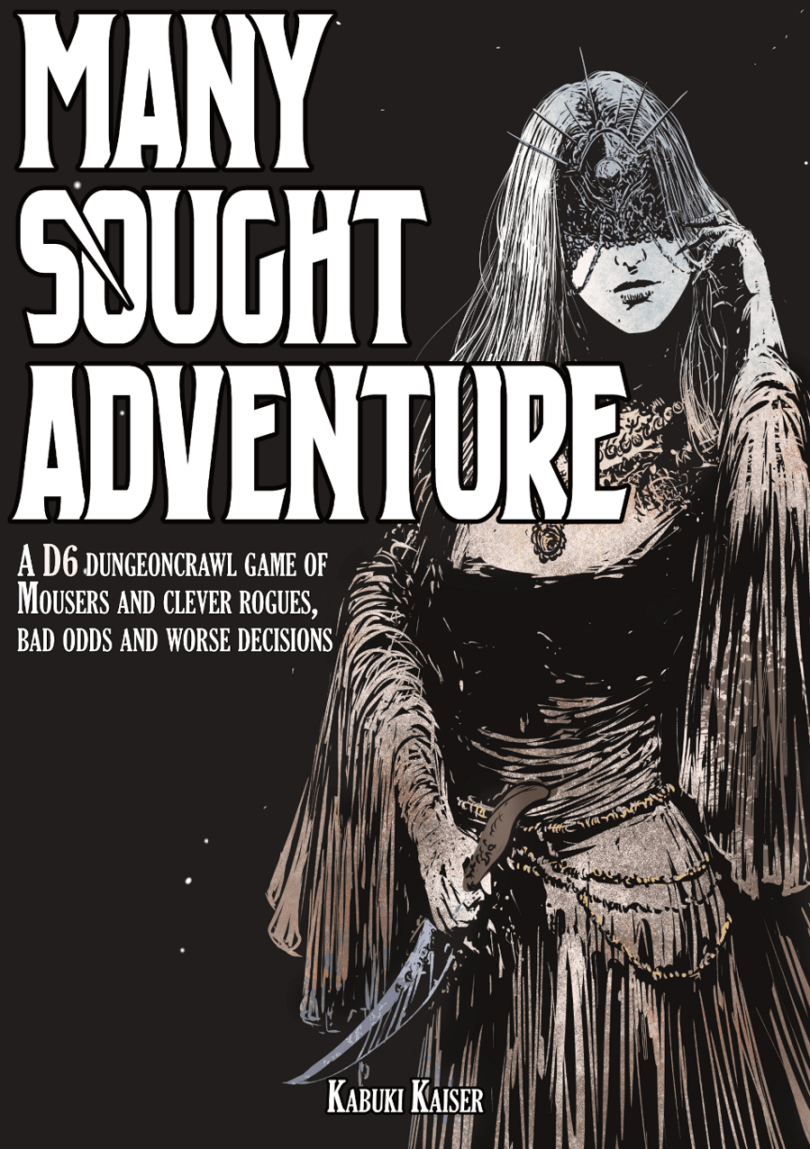
Many Sought Adventure is a dark fantasy RPG by Kabuki Kaiser and an Electrum best seller on DriveThruRPG. It uses a simple rule system based on Tunnels & Trolls (a D&D alternative with light rules and a built-in sense of humour that has a massive amount of solo adventures. For example, in combat, both sides roll dice, and the side with the lower total suffers damage that equals the difference between the two totals. In my eyes, it’s similar to Warhammer 40k). It also includes easy conversions for B/X, AD&D, 5E and OSR, so bonus points for that.
Disclaimer: We were provided with a free digital copy of this product.
Setting
Many Sought Adventure takes place after a catastrophic event, known as the Fall, the Cataclysm or the Great Sundering, depending on who narrates the story. Magic survives only through remnants hidden in forgotten places, such as scrolls, tomes, and sigils. The tone feels melancholic and oriented around survival. Instead of overwhelming players with complex mechanics, the game focuses on imagination and improvisation, making every action feel meaningful.
Speaking of meaningful actions, progression in the game matches this vibe. Characters level up at the end of each session, using XP that they either gain from impactful actions or from participating in combat encounters and killing monsters. This encourages players to engage with the world around them and not simply wait for things-and rewards– to happen.
System
The system is focused on simplicity, flexibility and fast resolution, and is basically a Tunnels & Trolls variation. The light mechanics make it approachable for players unfamiliar with the system (or heavier systems), allowing exploration and roleplay to remain at the centre of the gaming experience.
Character creation is pretty straightforward. Forget classes, optimisation and different dice(or not, just bring them with you either way). The six D&D stats are used, and you roll 3 x d6 for each. That’s where the fun comes. If you roll a triple, the dice explode: you keep their sum and reroll, then add the new total. So what appears as a failure (1 1 1) could transform into a memorable success! There’s no limit to the actual sum, so keep going until you don’t roll a triple! You then roll for a background and personality from two different tables, and all characters start with the roguery background as a bonus. As the name implies, roguery allows you to hide in the shadows, pick a lock, read lips, or do other sneaky stuff. Then there’s your gear. You get one fast pack, which is exactly what the name implies, with some essential equipment to aid you in your adventure, while everything else must be purchased.
Let’s talk about saves! The engine here is simple: you need 2d6 dice and a stat that best fits what you are trying to do. Your target result depends on the save’s difficulty, ranging from S1, which equals 20, to S9, which equals 60. But wait, how can 2d6 plus a stat reach 60? Firstly, double dice explode, like triple dice from above. Secondly, roguery gives you a +1d6 on everything roguish, and also a relevant background or personality gives a +1d6.
Remember those 3d6 you rolled at the start? For every point above 12, you get one add, but for every point below 9, you lose one add. This add is your well-known +1 (or -1) and is used for both attack and defence. And before you come at me for not mentioning hit points, well, forget hit points! Any damage goes straight into the constitution stat. So it’s time we mention how combat works.
During combat, the characters and their enemies fight together each round simultaneously. However, if any players do ranged attacks, cast spells or use items, they act first. If players and enemies shoot during the same round, then their actions resolve at the same time. The order goes like this:
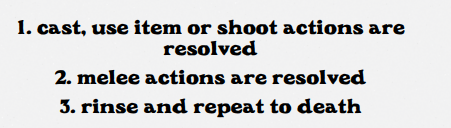
The players decide what to do before the beginning of each round, called declare intent, and that does not only involve the actual dice attack. Movement is available before or after those 3 phases, while no attacks of opportunity or movement feet restrictions are present. Depending on the action, it could work as a bonus action or, if it involves magic, a normal action. There is also the chaotic concept of the melee blur. In a melee blur, every side rolls dice plus their combat adds. The side with the lower total suffers the difference as damage, evenly shared among its members. Oh, don’t forget that armour cuts damage, but the rest affects constitution. A fun note is that a rolled 6 is automatically considered a -1 on con regardless of which side wins. Constitution dropped to 0? Death unless someone aids you within the next three rounds. Otherwise, say your goodbyes.
The system encourages creativity over melee blur and thinking outside of the box, and interacting with the environment. For example, take a good look at your surroundings. See that chair over there? Yeeet! These improvised actions are resolved with the same save system and count as your action for the round.
And finally, there’s magic. As there are no classes, every character can cast spells if they first attune to them, a process that takes a full week. On a successful attunement, the spell belongs to the caster and is unavailable to others, unless they willingly pass it to someone else, or perish… Naturally, magic comes with a price. To cast a spell, you spend 1 Con point per spell level, so be thoughtful about that. I’m very fond of this philosophy that makes actions meaningful, and magic feel unstable and ancient, rather than just another resource.
Layout & Art
The layout is very atmospheric and is presented on black-and-white pages that complement the tone of the setting. Information is structured in a clear way, effectively using bold text, headers, art and tables to introduce the system without cluttering the pages. Everything feels carefully placed in a logical order, allowing players to learn the mechanics one step at a time, although a table of contents is always welcome.
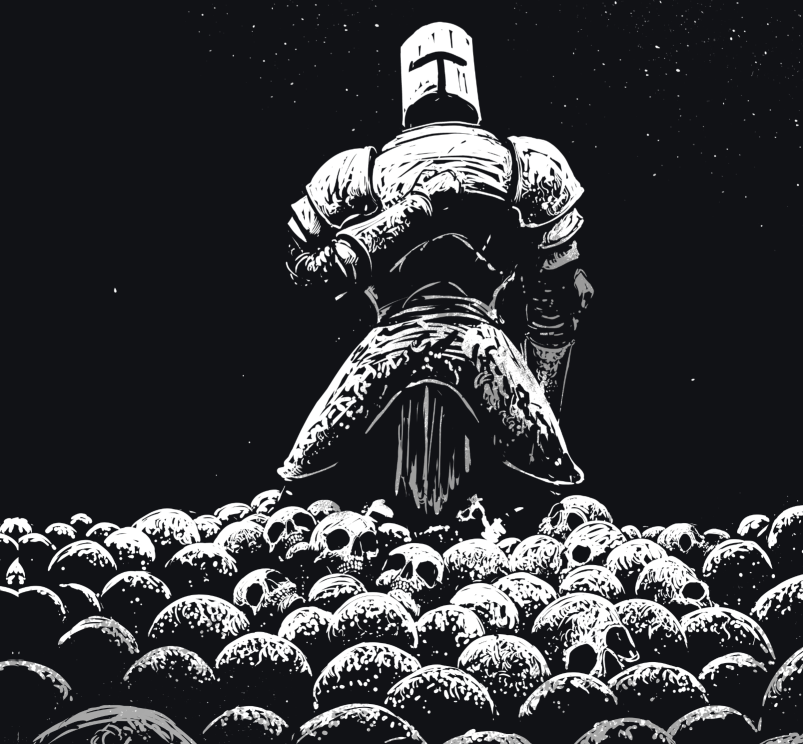
The illustrations support the melancholic atmosphere and the dangerous tone of the game beautifully. The heavy contrast between black and white captures the dark fantasy aesthetic and reinforces the feeling of wandering in a broken world. The lone knight below is a perfect example of that, as he kneels upon piles of skulls under an endless dark sky, not as a hero, but as a survivor who endured what others could not.
Final thoughts
Many Sought Adventure is a nice take on fantasy roleplaying, creating a world where every choice and spell feels valuable. I recommend it to players and Game Masters who enjoy darker settings, with risky magic systems rather than combat-heavy encounters. It is easy to learn, lightweight, and honestly, very interesting!
Stay crafty and mind your constitution,
Your new favourite author.
Join Our Mailing List
Do want…
- Extra content?
- Discounts?
- Updates about all our work?
This post contains affiliate links. By using them, you support the blog without any extra charge being applied to you.

