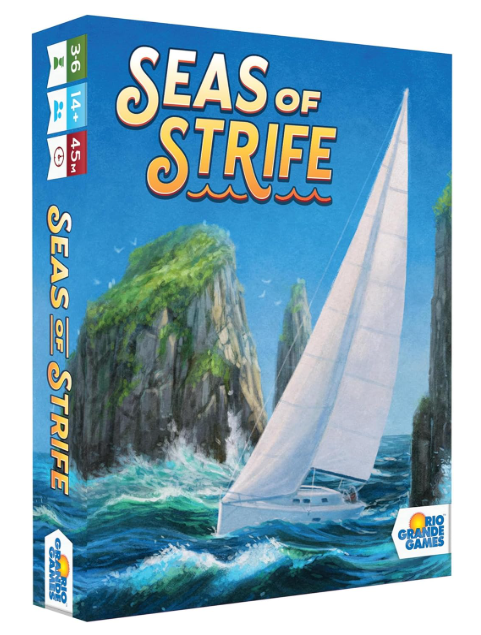
Don’t you love it when a boardgame pops up on your doorstep?
Seas of Strife is a simple game that takes the familiar (for most) concept of trick-taking, but with a twist. Instead of trying to win tricks using the highest or best card, here you try to avoid them as much as possible. It is aimed at 3-6 players, of ages 14+ and has a playtime of around 45 minutes.
The box
Seas of Strife keeps things minimal, with a small cardboard box that could fit almost everywhere. Inside it, you will find a deck of cards and two leaflets with the rules – both main and variant ones. And that’s it! No tokens, boards or extras. As a bonus, the cards fit inside the box even if you sleeve them! It is the kind of game that you can set up in seconds and play everywhere. – We actually played it in cafes and loved it, with sleeved cards and worry-free about spilling something on them!
Art & Card Types
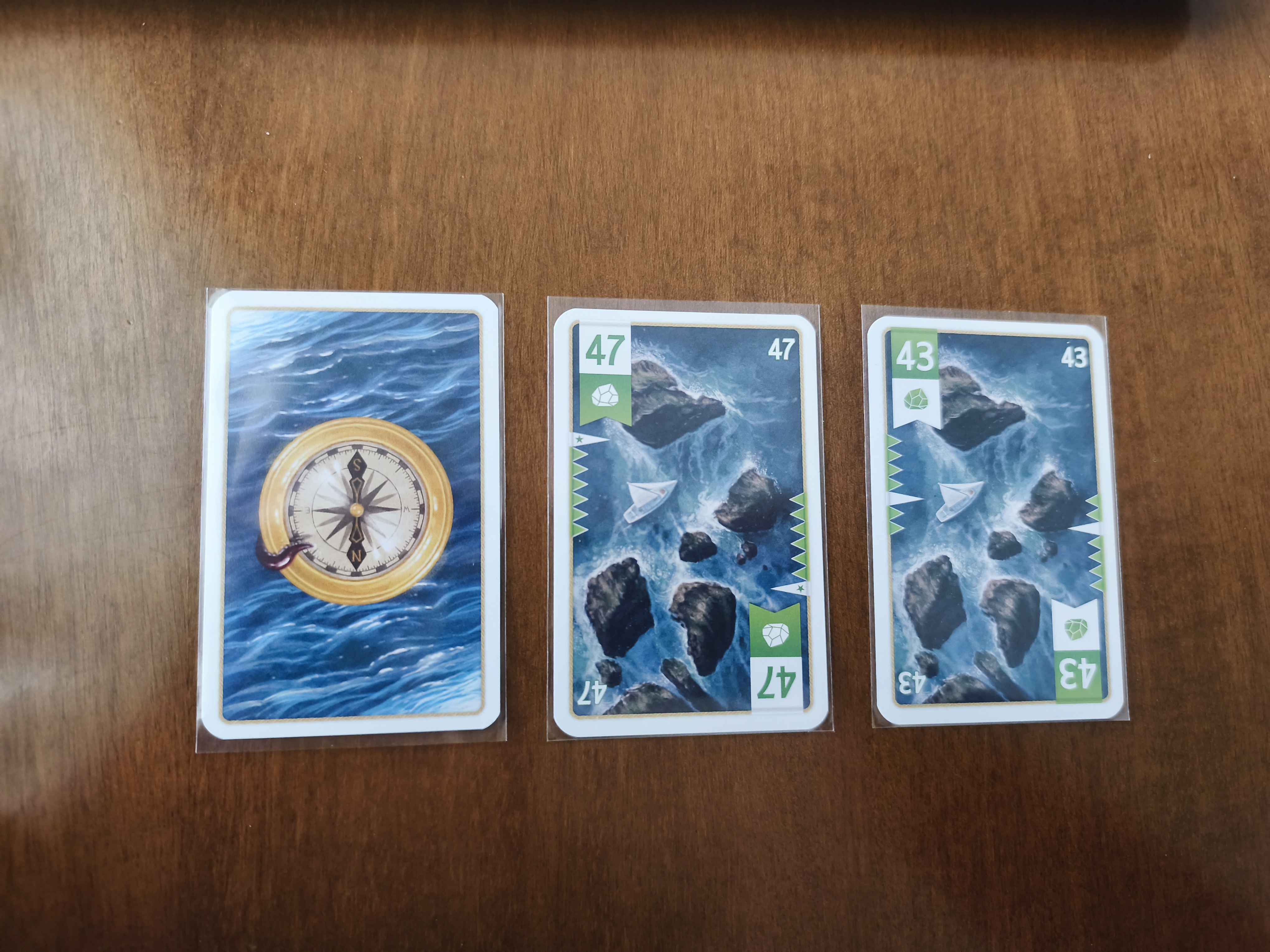
The art is clean, and both sides of each card illustrate the sea. The back side features a compass with a small tentacle grabbed by it.
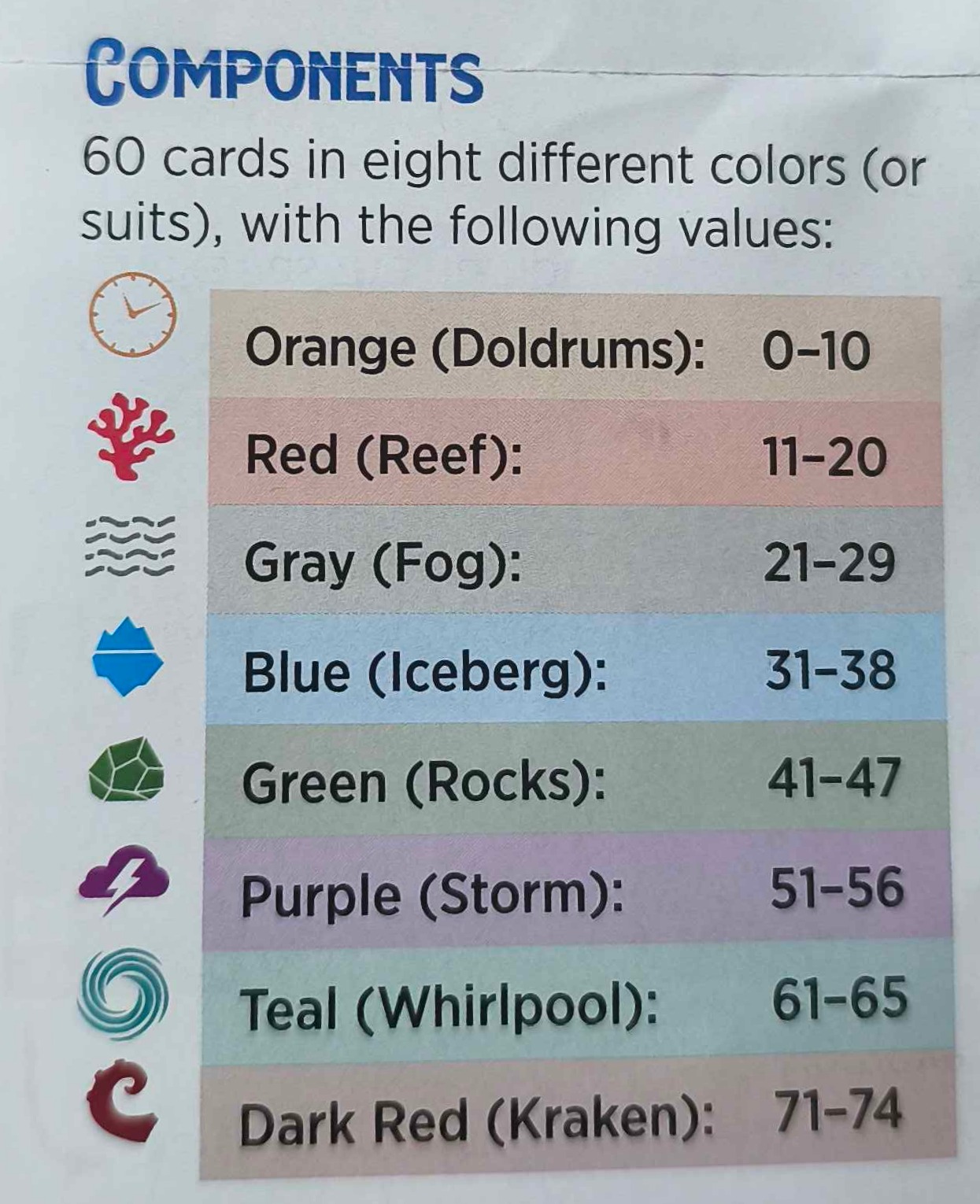
The cards are colour-coded, with each card displaying its value, suit and information about how many cards are in that specific suit in the form of small flags at the left of each card. The highest card of each suit has a reversed colour pattern and features a star in the rank flag so that you can recognise them easily. Although it seems like a small detail, it becomes surprisingly handy once you get the rhythm of the game. There are 60 cards in eight different colours, with values from 0 up to 74.
I’ll just leave this note here for those unfamiliar: suits are the different card colours, while a trick consists of each player playing a card. A round has that many tricks, as the number of cards each player has at the beginning.
Gameplay
Players are dealt all the cards, but if there are only 3 players, you remove 2 suits of cards before actually dealing. Each play begins with one player putting a card from their hand face-up in the center of the table, and then the other players must follow the suit if they can, or play any card if they cannot. Unlike traditional games, the dominant suit of a trick isn’t fixed, and if players start playing off-suit cards, the balance easily shifts. At the end of each turn, the suit that appears the most wins, and the player with the highest card of said suit takes the trick. If ties appear, the player with the highest card of any of the tied suits takes the trick. When a player does take a trick, they put the cards face down in front of them. Tricks are kept in separate piles so that any player can see how many tricks each one has and count them. And that’s exactly what you don’t want to do! As I said at the beginning, your goal is to take the fewest tricks possible.
The player who takes a trick gets to open the next one, meaning playing the first card on the table. However, if they had taken that trick with the highest card of a suit, they could decide which player opens the trick. When all cards have been played, the round ends. Each trick scores 1 penalty point, with the game ending at a certain number of points, depending on the number of players.
The variant rules include face cards where the highest value card of a suit zeroes the count for that suit, and does not win the trick, passing cards to other players, and happy faces that cancel out tricks.
Strategy
Every turn feels like a gamble, where you try to play cards without taking the trick. But what happens when you have the highest card? You try to predict and remember what other players have and adjust your strategy on the go. For example, if you have two red cards and red is already on the table, you can choose to play the lowest value card and avoid the trick, or actually play the highest if taking the trick can’t be avoided and set up the next trick in a way that benefits you! You can lure others to traps, hold cards until the time feels right, and notice patterns along the way. You can also trick others into taking the lead so that you can plan your next move.
Final Thoughts
Seas of Strife is a quick card game, with a small but meaningful twist. It is portable, easy to learn, and a nice option for groups that prefer interactive and a tiny bit of chaotic games. Its gameplay challenges the way we are used to think, by making us avoid what we were taught was winning.
Stay crafty and salty,
Your new favourite author.
Join Our Mailing List
Do want…
- Extra content?
- Discounts?
- Updates about all our work?
This post contains affiliate links. By using them, you support the blog without any extra charge being applied to you.

